
If we want to take the mobility transition seriously, we need to take a different approach to transportation spaces
“Magistralen are main roads and at the same time places to live and work. With a city-wide master plan, the Free and Hanseatic City of Hamburg is the first German metropolis to address the future role of its main thoroughfares.” What we have been investigating in Hamburg together with our planning team (urban catalyst, ARGUS Stadt und Verkehr, berchtoldkrass space & options), the city authorities and districts for more than two years is necessary at various levels in all our cities. Thinking about the significance of the main traffic axes together with the development opportunities of the adjacent districts, but also the redesign of the street spaces themselves, which, in addition to their function as mobility routes, will be an essential instrument for climate adaptation measures and resilient urban development in the future. In Hamburg, a strategic plan is being developed for the city’s ten main thoroughfares that combines tasks and requirements. At the same time, it describes the transformation of typical situations and specific locations along the 160 kilometers of arterial roads, which present a huge variety of conditions.
We are also focusing on these spaces in other areas of urban development: In Cologne, we have anchored the urban axes in the city strategy “Cologne Perspectives 2030+” as an important theme for future development. They are also an important development area for height, density, mixed and public uses in the city of Cologne’s height development concept, which we will complete in 2025.


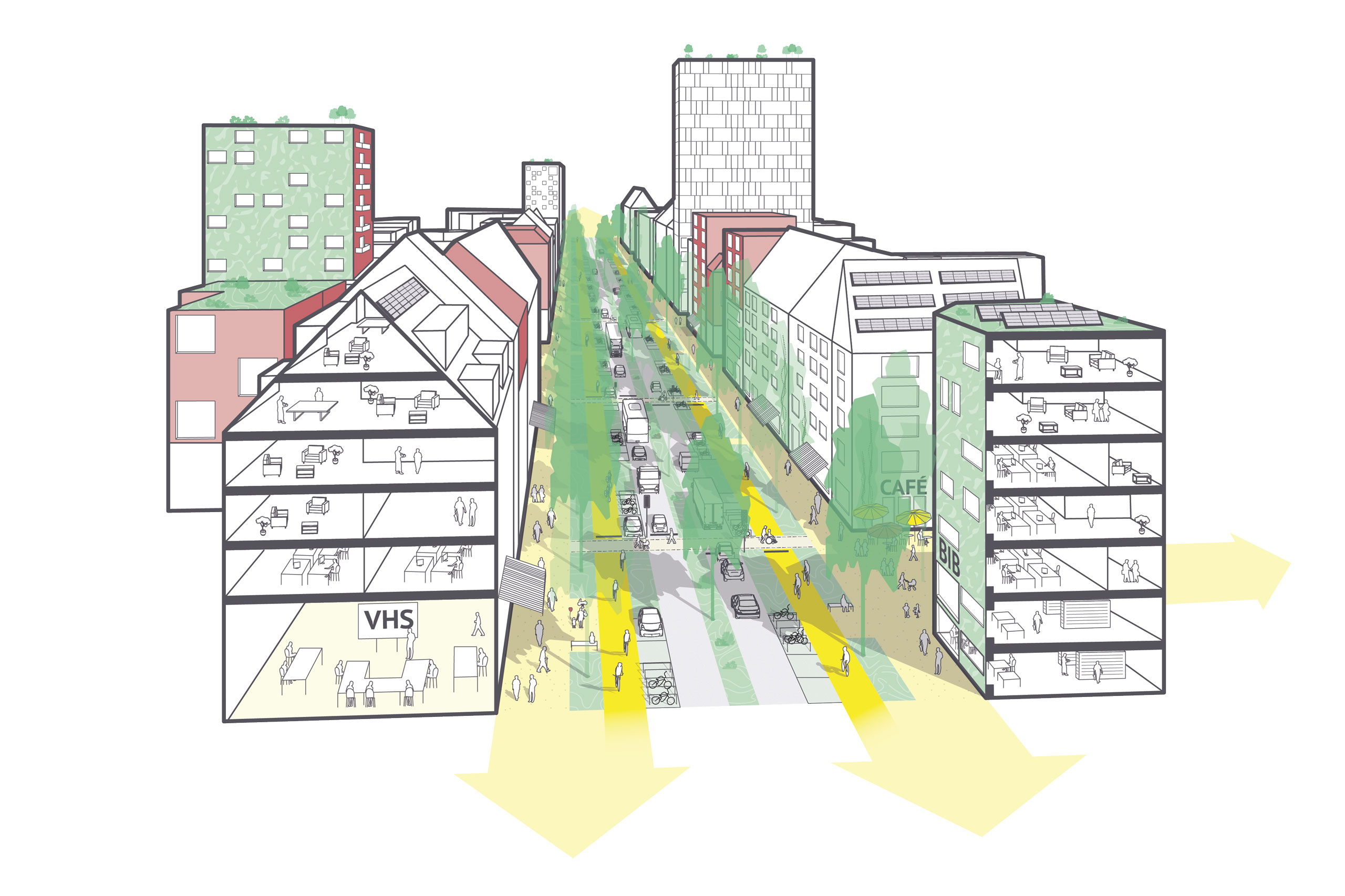
In our neighbourhood planning, we actively pursue a future-oriented approach to traffic areas. The station district in Dachau formulates a new perspective for the entire area around the station as an inner-city district and proposes an ambitious organization and design of the traffic areas. The district acts as a showcase project for the International Building Exhibition (IBA) in the Munich metropolitan region. In Gladbeck, the “37° Nordost – Stadtbauliche Entwicklung Gladbeck” project is creating a future perspective for the city through a tunnel solution for the A52, which still runs through the middle of the city. The city is using this transformation of a traffic area as a catalyst to address overarching issues of climate adaptation, mobility transition, inner development and a heterogeneous population structure.
In addition to our project work, we are also committed to sustainable mobility as “Good Mobility Fellows”. Five auditors check our projects – from urban development concepts to project planning – for their mobility quality according to the criteria of the Good Mobility Council.
You are currently viewing a placeholder content from YouTube. To access the actual content, click the button below. Please note that doing so will share data with third-party providers.
More InformationDachau station quarter
Credit: ASTOC