
Campus Transformation in Practice – Shaping the Future of Higher Education Construction
Just a few years ago, the mission was clear: manage growth, create space, and build new facilities. Master plans for university campusesincluding those we helped develop in the 2010s and early 2020s–were characterized by expansion. More students, more research clusters, more square meters.
Today, the mandate is different–and it comes from multiple sources at once. Universities are public institutions that serve as role models: They are called upon to use space more efficiently, conserve resources, and actively promote interaction. Political mandates make this a binding requirement–such as the goal of reducing office space by up to 30% by 2030. At the same time, the academic success of many universities continues to generate demand for space, while a massive backlog of renovation projects awaits solutions. Buildings outlast generations. Work practices, organizational structures, and usage requirements change much more rapidly. This gives rise to one of the central questions in university construction: How can campuses, spaces, and buildings remain adaptable in the long term?
The brochure “Designing Sustainable Higher Education Facilities,” which we developed in collaboration with our planning partner rheform as part of a project by the Baden-Württemberg Ministry of Finance and Science, addresses precisely this question. The central insight is not a technical one, but a conceptual one: university construction does not need a growth stimulus; it needs a paradigm shift. The transformation does not take place through campus expansions, but from within. Spaces no longer need to belong to a specific person or organizational unit; instead, they should serve a specific activity. Areas are organized according to function and working methods, not according to hierarchy and ownership. The square meter that is neither built nor operated is the most cost-effective and sustainable.
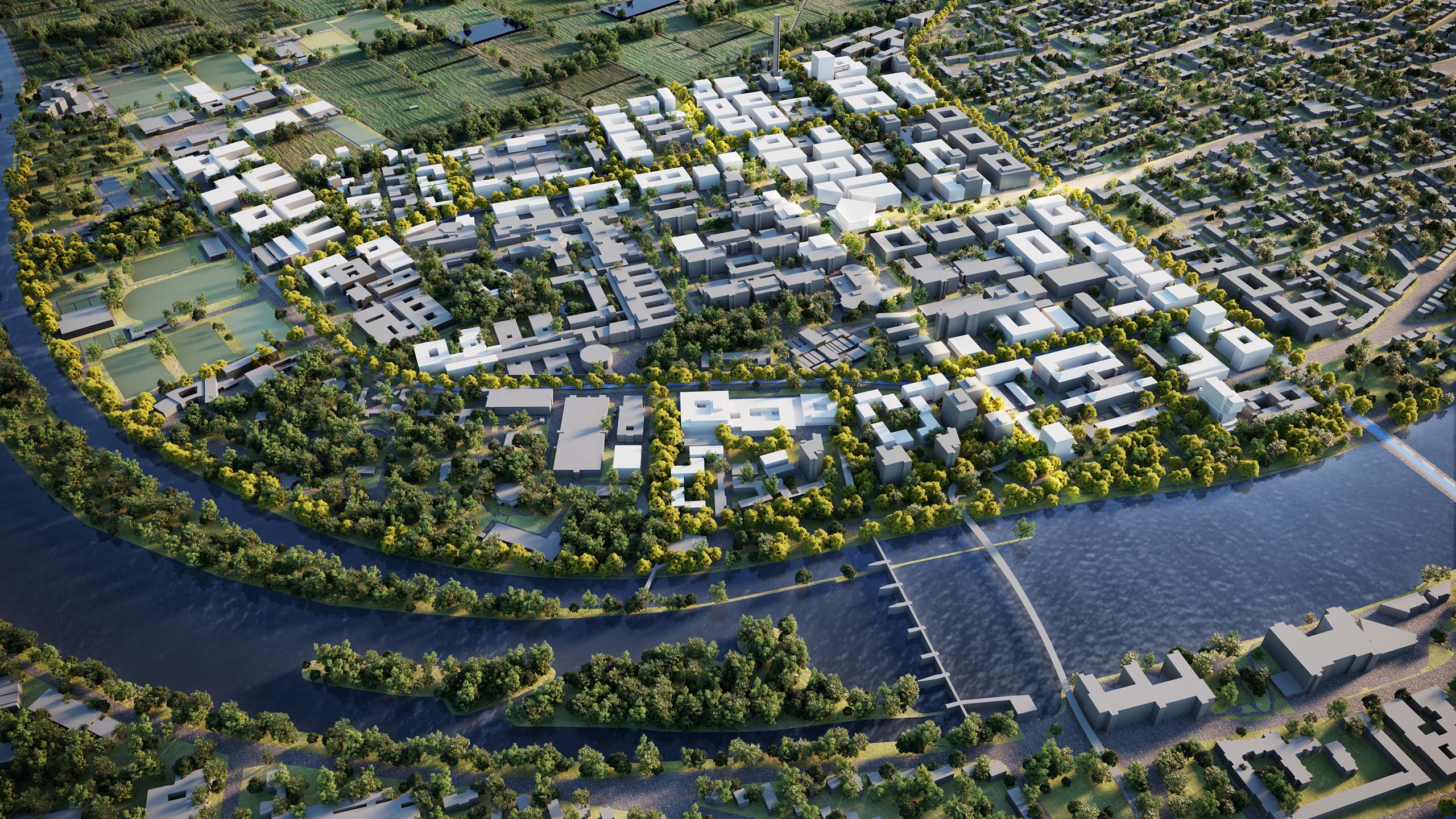

This requires more than just architectural solutions. Genuine campus transformation calls for a cultural shift within institutions, new governance structures, and a planning approach that integrates academic strategy, land use development, and climate protection goals from the very beginning. The campus is becoming an open knowledge hub: integrated into the city, the economy, and society; enlivened by complementary uses; and connected beyond its own boundaries.
This is exactly where we come in. At numerous university campuses, we develop comprehensive master plans and strategic campus development plans that translate this vision into concrete spatial concepts and actionable processes. Implementing new approaches is challenging for everyone involved, from the university administration down to the academic departments. After all, true transformation cannot be merely managed–it must be actively shaped.
Credit: (1, 2) ASTOC, (3) Christa Lachenmaier